Liberty Cap Half Cent Identification Guide: 1793 Head Left, 1794-1797 Head Right, With Pole and No Pole, Key Date 1796, Cohen Varieties, Grading, and Values
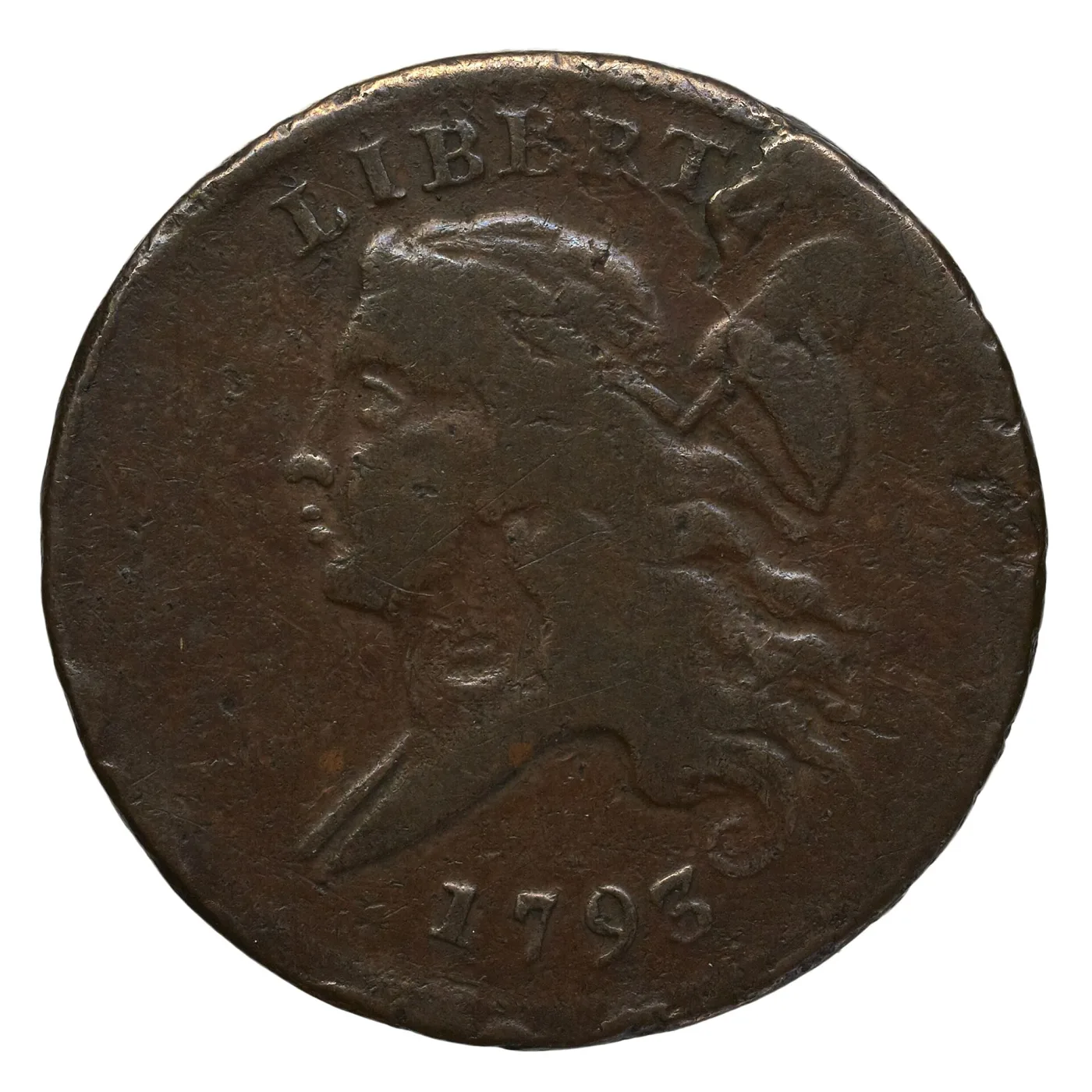
The Liberty Cap Half Cent is the first design type of the United States half cent denomination and the very first half cent ever struck under the Coinage Act of 1792. Produced in pure copper from 1793 through 1797, it is the foundation stone of American copper coinage — a coin made in the earliest days of the Philadelphia Mint, on hand-cut dies, with hand-applied edge devices, in quantities so small that many varieties survive in only a few dozen examples. For collectors of early American copper, the Liberty Cap half cent is where the story begins, and its legendary 1793 first-year issue and 1796 key date are among the most coveted coins in the entire United States series.
The type is also one of the most genuinely difficult to identify and attribute correctly, because it changed dramatically across its five-year run. The 1793 coins show Liberty facing left with a Phrygian liberty cap on a pole behind her head; from 1794 onward, the portrait was redesigned to face right. The edges shift from lettered (“TWO HUNDRED FOR A DOLLAR”) to plain to gripped depending on the year and variety. Some 1795 and 1797 coins were struck on cut-down planchets made from spoiled large cents or even foreign tokens. And two of the most famous diagnostics in early copper — the “With Pole” versus “No Pole” distinction and the 1796 “LIHERTY” blundered die — live entirely within this short series.
This guide is the comprehensive 2026 reference for identifying, attributing, grading, authenticating, and valuing Liberty Cap Half Cents. You will learn how to separate the 1793 Head Left from the 1794-1797 Head Right portraits, how to recognize the With Pole and No Pole varieties of 1795 and 1796, why 1796 is one of the great rarities of the American series, how the lettered, plain, and gripped edges are diagnosed, the Cohen die variety attribution system used by copper specialists, EAC grading standards for early copper, counterfeit and alteration detection, and current retail market values across every date. Whether you are completing the first slot in a four-coin half cent type set, chasing the 1796 as a trophy, or simply trying to identify a heavily worn copper coin from an old collection, this guide will give you a working specialist’s command of the first half cent ever made.
History and Background
The half cent was authorized by the Coinage Act of April 2, 1792, which established the United States Mint in Philadelphia and defined the new nation’s decimal coinage. The half cent was the lowest denomination in the system, valued at one two-hundredth of a dollar, and was intended to make small change practical in an economy still flooded with foreign coppers and merchant tokens. The first half cents — the Liberty Cap type — were struck in 1793, the same year the Mint produced its first copper cents, and they share the earliest chapter of American minting history with the famous large cent of 1793.
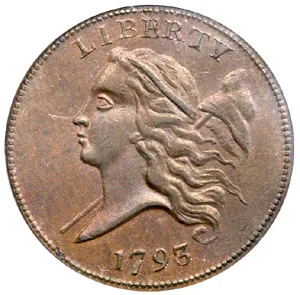
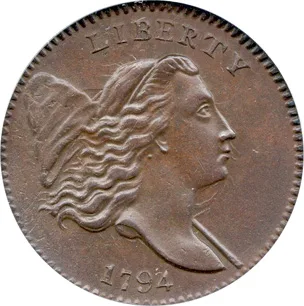
The 1793 half cent was designed with Liberty facing left, her hair flowing free, a Phrygian liberty cap carried on a pole over her shoulder — an emblem of freedom borrowed from Roman iconography and the symbolism of the French and American revolutions. The design is often attributed to Henry Voigt or Adam Eckfeldt, early Mint figures who cut many of the first dies by hand. After only one year, the Mint reversed the portrait: from 1794 the head faces right, in a redesign generally credited to Robert Scot, the Mint’s first chief engraver, with assistance from John Smith Gardner. This Head Right portrait, modified again in 1795 and 1797, carried the type through to its end.
Production of Liberty Cap half cents was small and erratic, reflecting the limited demand for such a tiny denomination and the chronic shortages of suitable copper planchets in the 1790s. The Mint frequently struck half cents on cut-down planchets salvaged from misstruck large cents, from the copper “Talbot, Allum & Lee” store-card tokens the Mint had purchased as scrap, and from other expedient sources. By 1797 the Liberty Cap design had run its course, and in 1800 the denomination was redesigned again as the Draped Bust half cent by Robert Scot, beginning the second of the four headline half cent types.
A Coin of the First Mint
Every Liberty Cap half cent was struck at the first Philadelphia Mint, the modest brick building on Seventh Street that was the first federal building erected under the Constitution. These coins were made on screw presses, from dies cut and lettered by hand, by a tiny staff working with primitive equipment. No two die pairs are exactly alike, which is precisely why the Cohen variety system (discussed below) can attribute almost every surviving coin to a specific die marriage. Holding a Liberty Cap half cent is, quite literally, holding a product of the founding years of the United States Mint.
The Start of the Half Cent Lineage
The Liberty Cap half cent is the first of the four headline half cent designs: Liberty Cap (1793-1797), Draped Bust (1800-1808), Classic Head (1809-1836), and Braided Hair (1840-1857). The denomination ran continuously, if irregularly, for sixty-four years before its abolition in 1857. As the foundational type, the Liberty Cap is the most historically resonant — and usually the most expensive — slot to fill in a complete four-coin half cent type set.
Design and Diagnostic Features
The single most important first step in identifying a Liberty Cap half cent is determining which direction Liberty faces, because the type splits cleanly into a one-year Head Left issue (1793) and a four-year Head Right issue (1794-1797). After that, the date, the presence or absence of the pole, and the edge device complete the attribution.
Obverse
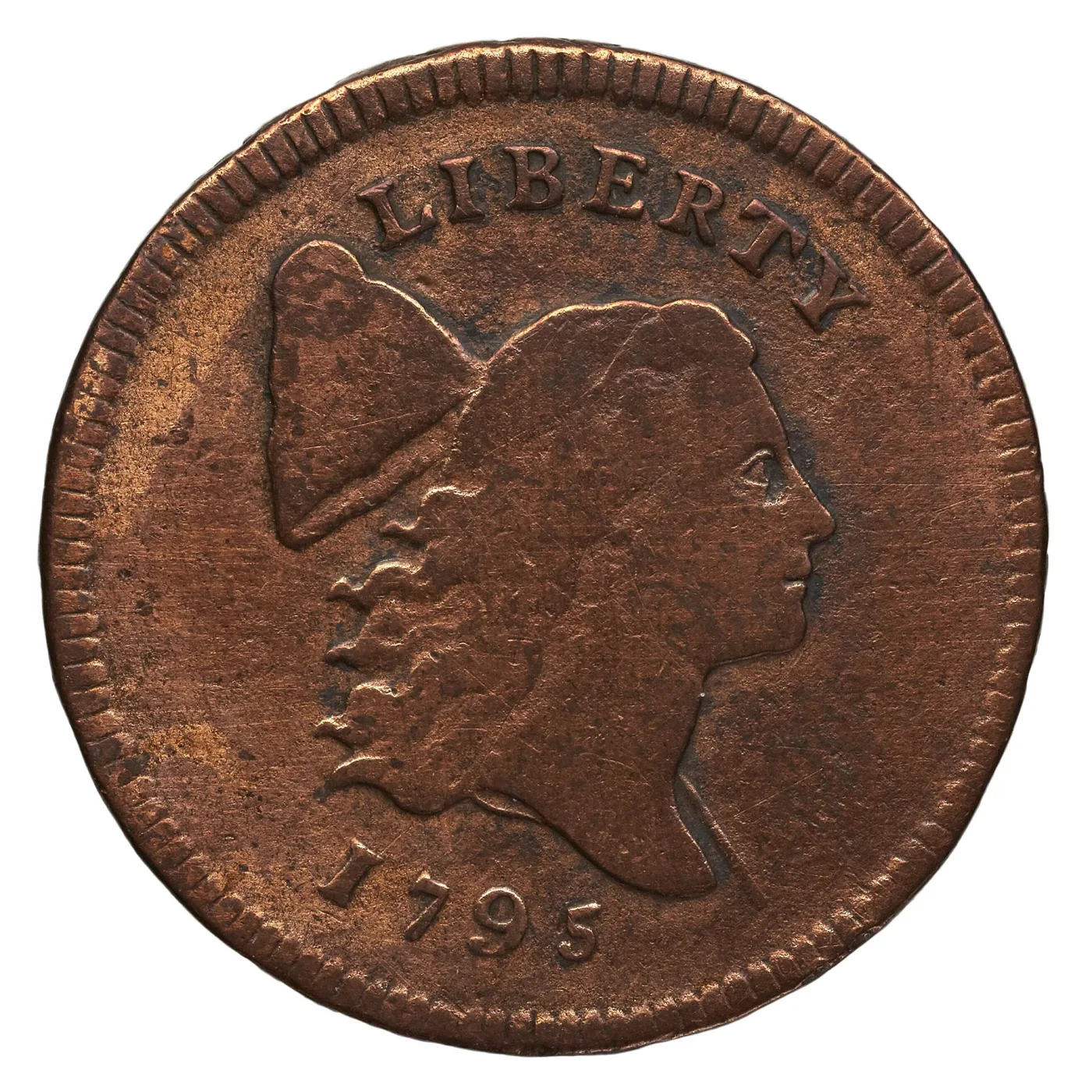
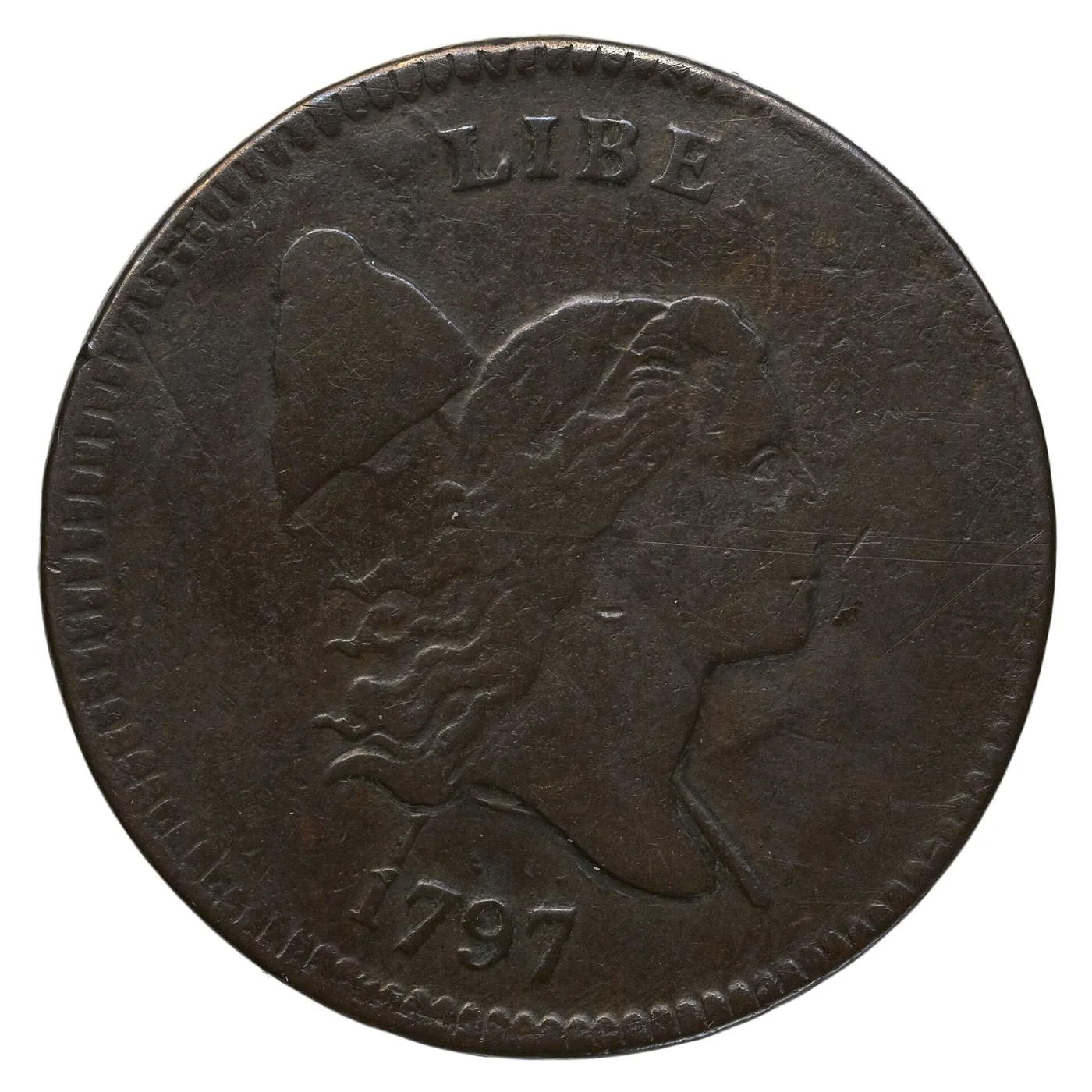
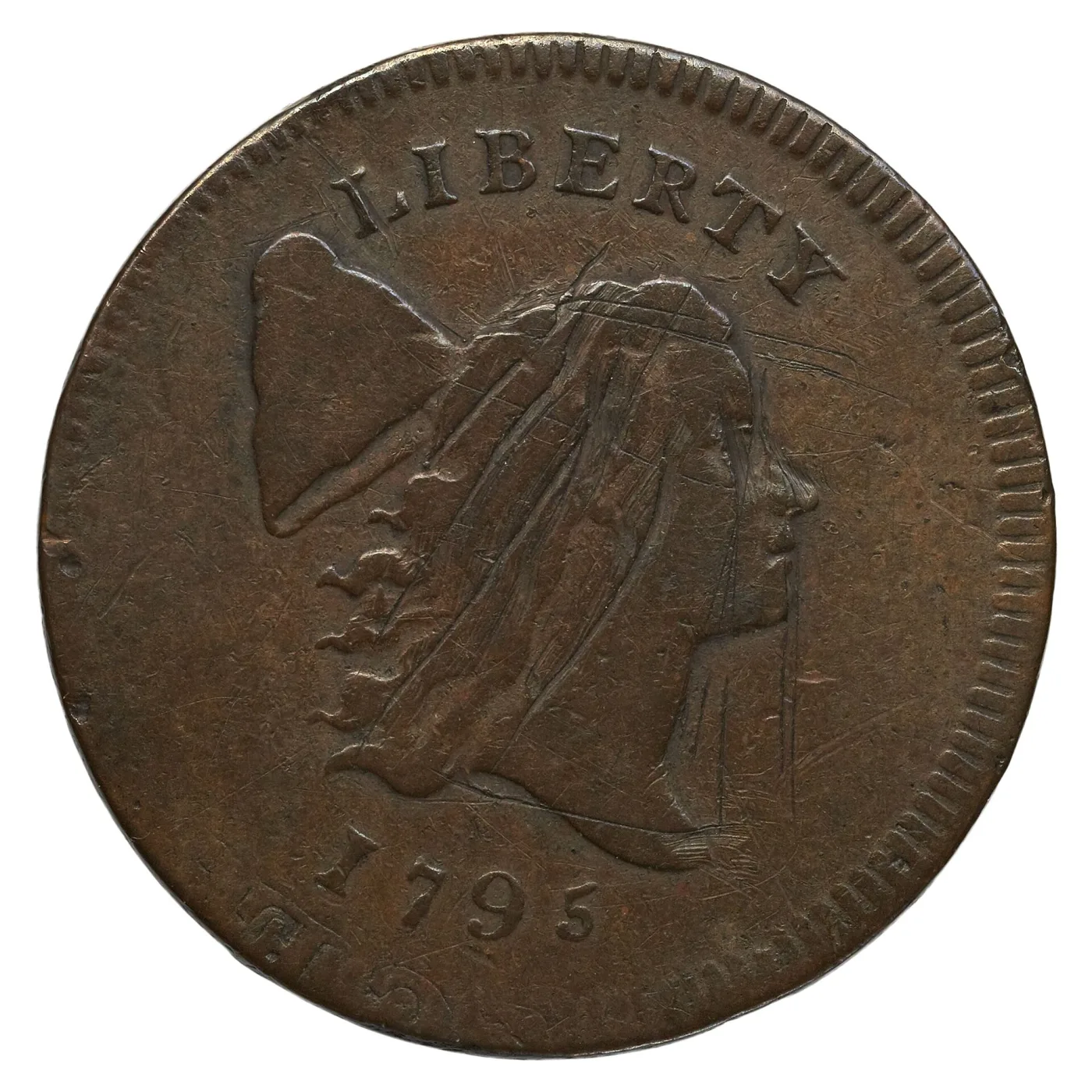
The obverse shows the head of Liberty with flowing hair and a Phrygian liberty cap carried on a pole. In 1793, Liberty faces left; from 1794 onward she faces right. The word “LIBERTY” arches above the head in raised letters, and the date appears below the bust. The pole rests against the back of the neck and rises over the shoulder with the cap at its top — except on the famous “No Pole” varieties of 1795 and 1796, where die lapping (polishing) removed the pole entirely, leaving the cap apparently floating. There is no mint mark on any Liberty Cap half cent; the entire series was struck at Philadelphia.
Reverse
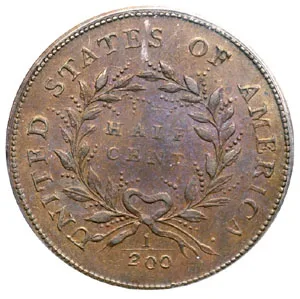
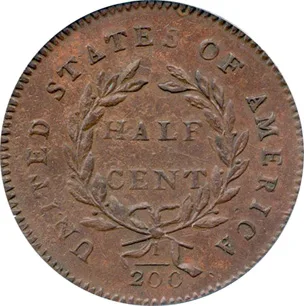
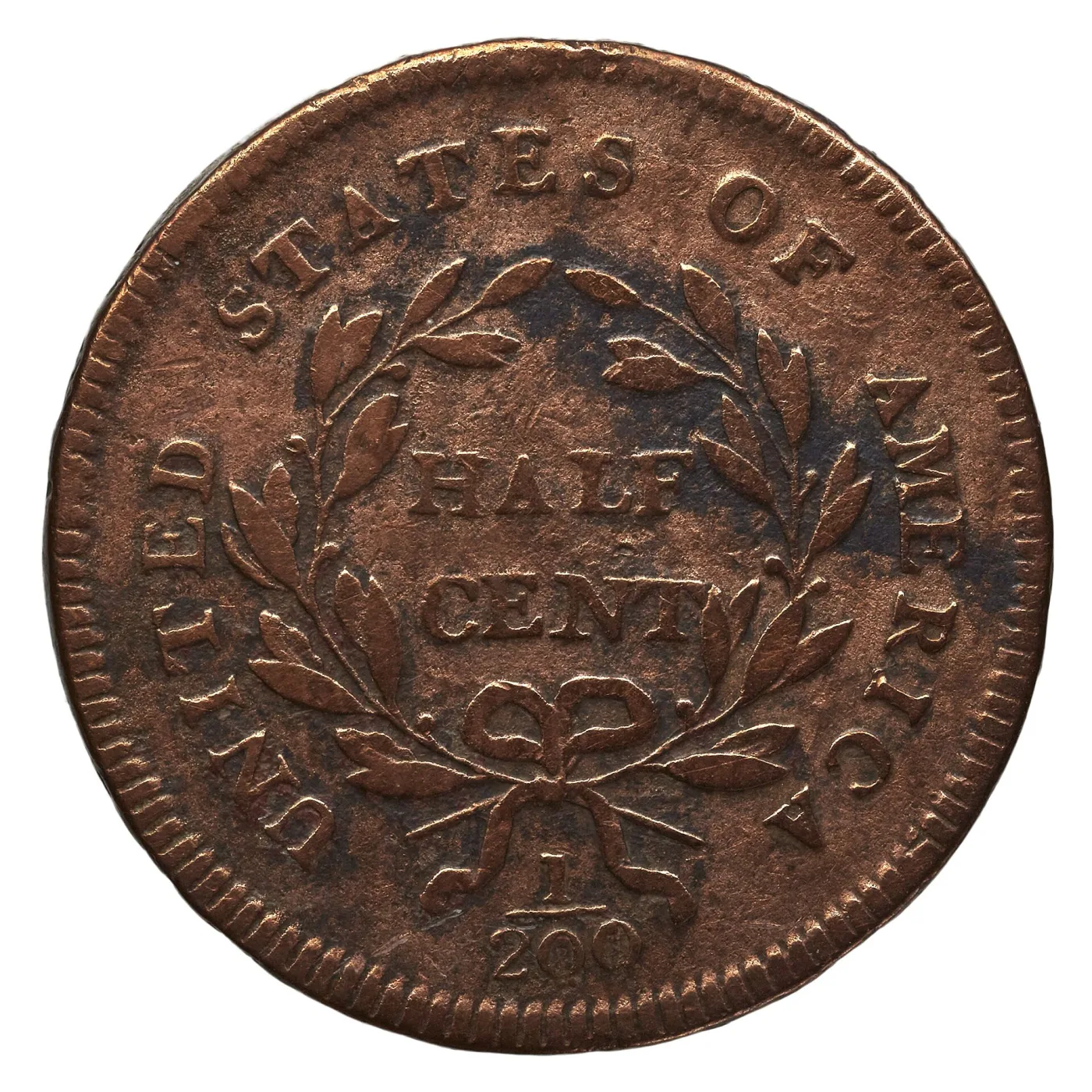
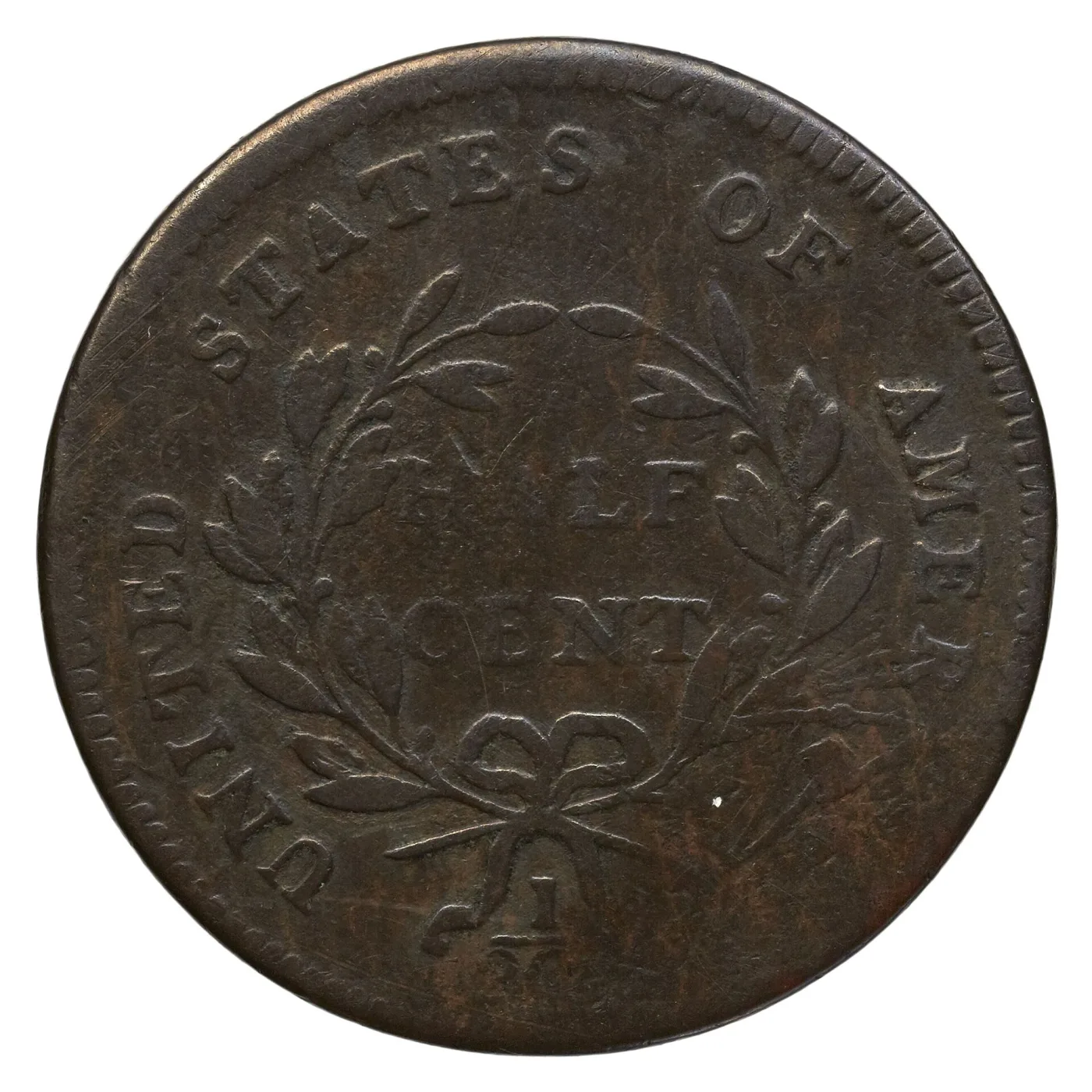
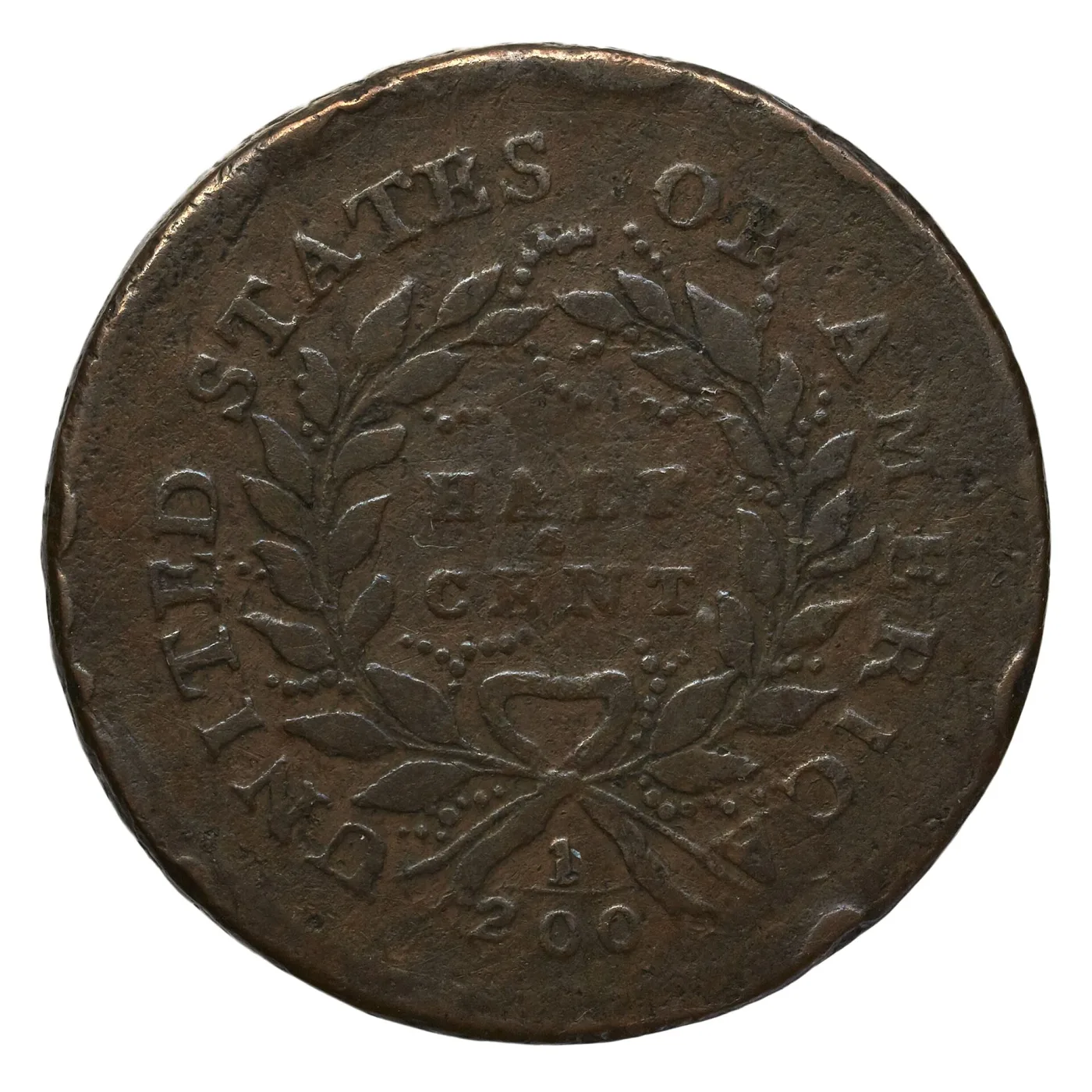
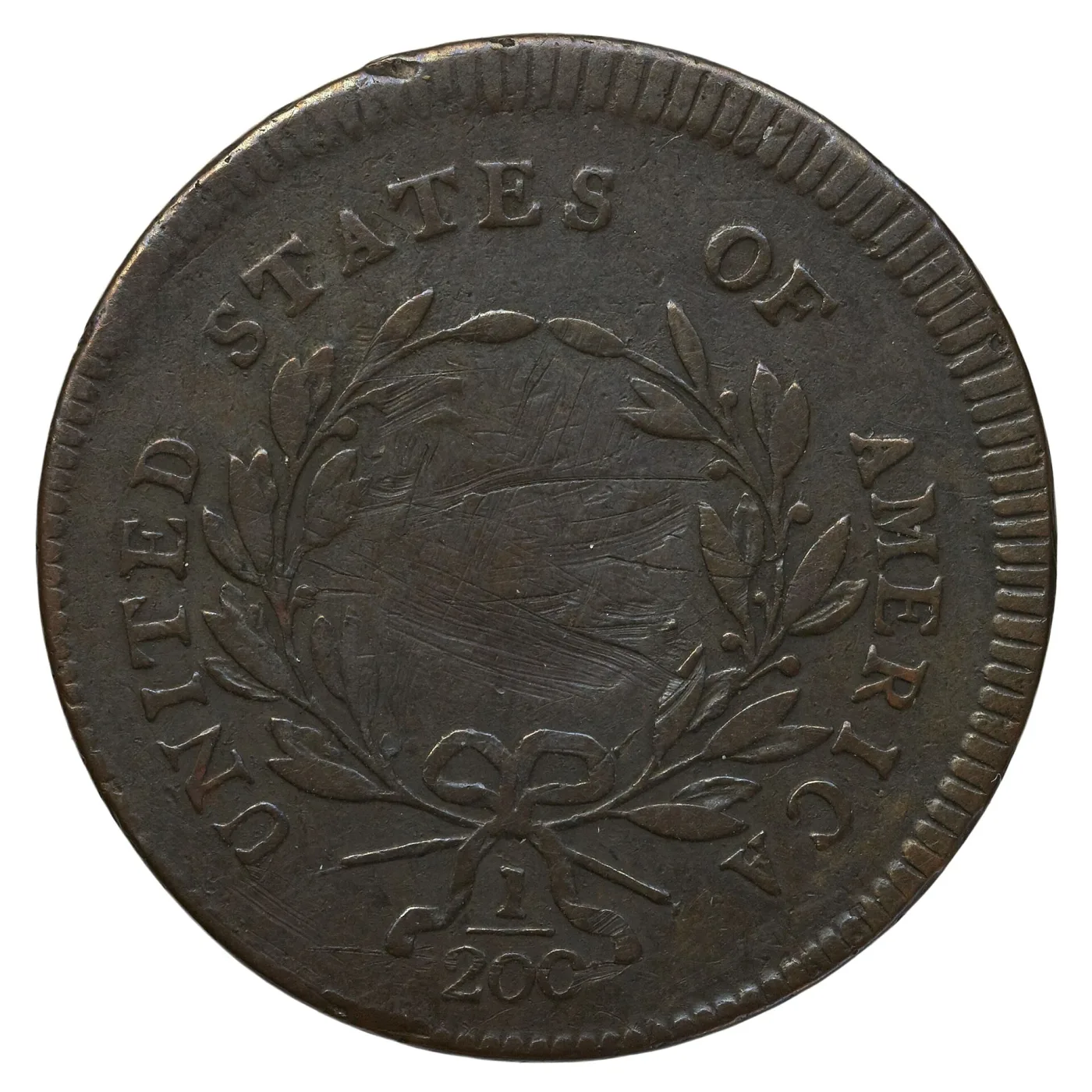
The reverse displays the denomination “HALF CENT” within a wreath, with “UNITED STATES OF AMERICA” arching around the outside and the fraction “1/200” beneath the wreath — indicating the coin’s value as one two-hundredth of a dollar. This “1/200” fraction is a key diagnostic of the early half cents: it appears on the Liberty Cap and Draped Bust types but was dropped beginning with the Classic Head in 1809. The wreath is tied at the bottom with a ribbon bow. The arrangement and spacing of the lettering and the shape of the wreath berries are used by specialists to attribute individual die varieties.
Edge
Unlike later half cents, which all have plain edges, the Liberty Cap series uses several different edge devices depending on the year. The 1793 and most 1794-1795 coins have a lettered edge reading “TWO HUNDRED FOR A DOLLAR.” Beginning in 1795, many coins have a plain edge. The 1797 includes plain-edge, lettered-edge, and the unusual “gripped edge” (a series of milled indentations) varieties. The edge is therefore not just decoration — it is part of the attribution and a powerful authentication tool, since the correct edge must match the date and variety.
Diagnostic Quick Identification
To confirm the Liberty Cap type versus the neighboring Draped Bust: look for the cap on a pole and the flowing (untied) hair. The Liberty Cap shows a Phrygian cap carried on a pole and hair that flows freely; the Draped Bust type that followed shows no cap or pole, hair tied back with a ribbon, and drapery across the bust. If the coin has a cap on a pole, a “1/200” fraction on the reverse, and a date between 1793 and 1797, it is a Liberty Cap half cent. Then determine the direction of the portrait (left = 1793 only) and check the edge.
Composition and Physical Specifications
Liberty Cap half cents were struck in pure copper, but the standards shifted during the series as the Mint adjusted to copper supply and the rising cost of metal. Two distinct weight standards apply, and knowing which one governs a given date is essential for authentication.
Standard Specifications (1793-1797)
- Composition: 100% copper (pure)
- Weight (1793 and early 1794-1795): 6.74 grams (104 grains) — the heavier standard
- Weight (later 1795-1797): 5.44 grams (84 grains) — the lighter standard adopted by the Act of January 26, 1796
- Diameter: approximately 22-24 mm (varies; dies and planchets were not perfectly uniform)
- Edge: Lettered (“TWO HUNDRED FOR A DOLLAR”), plain, or gripped, depending on date and variety
- Mint: Philadelphia only (no mint mark)
- Designers: 1793 attributed to Henry Voigt / Adam Eckfeldt; 1794-1797 Robert Scot and John Smith Gardner
The weight reduction in 1795 is one of the most useful authentication anchors in the series. The lighter coins (5.44 g) are typically the thin-planchet, plain-edge issues, while the heavier coins (6.74 g) are typically the thick-planchet, lettered-edge issues. A coin claimed to be a particular variety should match the correct weight and edge for that variety. Many Liberty Cap half cents were struck on cut-down planchets, and a small number of 1795 and 1797 coins show traces of the undertype (the original token or coin from which the planchet was cut), which is a fascinating diagnostic but also a frequent point of confusion for new collectors. Because these coins are so old and so often worn, weight alone is not definitive — but a coin that is dramatically outside the expected range, or has the wrong edge for its date, should be examined carefully for authenticity.
Date-by-Date Analysis (1793-1797)
The Liberty Cap Half Cent spans only five dates, but each is distinct and several contain multiple major varieties. Mintages were tiny by modern standards and survival rates low, so even “common” dates in this series are scarce coins. Values below are 2026 retail estimates for problem-free, original-surface examples; major varieties can command large premiums over these figures.
1793 — Head Left, First Year
Mintage: approximately 35,334. The only year with Liberty facing left and the only one-year sub-type of the series. The 1793 half cent is one of the most desirable single-year coins in American numismatics, prized as a first-year issue from the founding year of the Mint. All 1793 coins have a lettered edge (“TWO HUNDRED FOR A DOLLAR”) and the heavier 6.74-gram standard. There are several Cohen die varieties (C-1 through C-4), all scarce. Values: G-4 $4,500, F-12 $9,000, VF-20 $16,000, EF-40 $35,000, AU-50 $70,000+, MS-63 BN $200,000+.
1794 — Head Right, Large and Small Editions
Mintage: approximately 81,600. The first Head Right year, with the portrait redesigned to face right. Numerous Cohen varieties exist (roughly C-1a through C-9), including “Large Edition” and “Small Edition” head styles and both high-relief and normal-relief heads. All 1794 coins have a lettered edge. The 1794 is more available than 1793 but still a genuinely scarce early date. Values: G-4 $500, F-12 $1,200, VF-20 $2,400, EF-40 $5,500, AU-50 $11,000, MS-63 BN $35,000+.
1795 — Transition Year (Lettered and Plain Edge, With and No Pole)
Mintage: approximately 139,690. The most complex date of the series, spanning the change from the heavy lettered-edge standard to the light plain-edge standard, and including both With Pole and No Pole varieties. Key sub-types: 1795 Lettered Edge, With Pole (thick planchet); 1795 Plain Edge, With Pole (thin planchet); 1795 Plain Edge, No Pole; and the famous 1795 “Punctuated Date” (where a die flaw or recutting places a mark resembling a comma between the 1 and 795). Values vary widely by variety: common Plain Edge G-4 $400, F-12 $900, EF-40 $3,500, AU-50 $7,500; Lettered Edge and Punctuated Date varieties command substantial premiums.
1796 — The Great Key Date (With Pole and No Pole)
Mintage: approximately 1,390 (combined). The 1796 is the undisputed key date of the Liberty Cap series and one of the rarest regular-issue coins in the entire United States series. It comes in two varieties: 1796 With Pole (C-1) and 1796 No Pole (C-2, which also shows the blundered “LIHERTY” spelling). Only a few dozen examples of each are known, and many are in low or impaired grades. The 1796 is a six-figure coin even in modest condition. Values: With Pole G-4 $35,000, F-12 $70,000, EF-40 $175,000+, MS $400,000+; No Pole (LIHERTY) G-4 $30,000, F-12 $60,000, EF-40 $150,000+. Both are trophy coins.
1797 — Final Year (Plain, Lettered, and Gripped Edge; 1 Above 1)
Mintage: approximately 127,840. The last year of the type, and a date rich in varieties: 1797 Plain Edge, 1797 Lettered Edge, 1797 Gripped Edge, and the distinctive 1797 “1 Above 1” (where a stray 1 punch appears above the date). The Lettered Edge and Gripped Edge 1797s are rare and valuable; the Plain Edge is the most available. Values: Plain Edge G-4 $400, F-12 $1,000, EF-40 $4,000, AU-50 $9,000; Lettered Edge and Gripped Edge varieties command large premiums, and the rarest 1797 die marriages are major rarities in their own right.

With Pole vs No Pole Varieties
The “With Pole” and “No Pole” distinction is one of the most important — and most misunderstood — diagnostics in the Liberty Cap half cent series. It applies to the 1795 and 1796 dates and can mean the difference between a scarce coin and a six-figure rarity, so it is worth understanding precisely.
What the Pole Is
On the normal design, Liberty’s cap is carried on a pole (a staff) that rests against the back of her neck and rises over her shoulder, with the cap at its top. This is the “With Pole” configuration — the design as originally engraved. The pole is a thin raised line running diagonally behind the head.
Why Some Coins Have No Pole
The “No Pole” varieties were not a deliberate redesign. They resulted from die lapping — the periodic polishing of a worn or clashed die to remove imperfections. Because the pole was a shallow, fine element near the edge of the design, aggressive lapping ground it away entirely, leaving the cap apparently floating with no visible support. The 1795 No Pole and the 1796 No Pole are therefore products of die maintenance, not separate models, but collectors treat them as distinct, highly collectible varieties.
How to Tell Them Apart
Examine the area behind Liberty’s neck and below the cap. If you can see a thin raised diagonal line connecting the cap to the shoulder, the coin is With Pole. If that line is entirely absent — and the cap simply sits in the field with nothing beneath it — the coin is No Pole. Be careful: heavy wear can weaken the pole to the point of near-invisibility on a genuine With Pole coin, which is a frequent source of misattribution. On a true No Pole, the pole is absent because it was lapped off the die, so it will be absent on every coin from that die state, even in higher grades. When in doubt, attribute by the full die marriage (Cohen number), not by the pole alone.
Why It Matters
The 1796 No Pole is one of the two great 1796 rarities and also carries the LIHERTY blunder. Confusing a worn 1796 With Pole for a No Pole — or vice versa — can dramatically misstate value. For the 1795, the No Pole varieties are scarcer than the common Plain Edge With Pole and command a premium. Precise attribution is essential before buying or selling any 1795 or 1796 Liberty Cap half cent.
The 1796 Key Date and the LIHERTY Error
If the Liberty Cap series has a single trophy coin, it is the 1796 half cent. With a combined mintage of roughly 1,390 pieces across both varieties and only a few dozen survivors of each, the 1796 ranks among the rarest and most valuable regular-issue United States coins — a coin that anchors advanced early-copper collections and headlines major auctions whenever an example appears.
The Two 1796 Varieties
The 1796 comes in just two die marriages: the 1796 With Pole (Cohen-1) and the 1796 No Pole (Cohen-2). The With Pole is generally considered the slightly more available of the two, though both are extreme rarities. Each is so scarce that essentially every known specimen is plated and pedigreed in the specialist literature, and the appearance of a new example at auction is a significant event.
The LIHERTY Blunder
The 1796 No Pole variety also displays one of the most famous engraving blunders in American numismatics: the word “LIBERTY” appears as “LIHERTY,” with an H where the B should be. This occurred because the engraver’s B punch was damaged or improperly entered, producing a letter that reads as an H. The LIHERTY error is diagnostic for the 1796 No Pole and adds to its desirability — it is both a great rarity and a celebrated mint error, a combination that makes it one of the most storied coins of the early Mint.
Why 1796 Is So Rare
The tiny 1796 mintage reflects the Mint’s chronic copper-planchet shortages and the low priority given to such a small denomination in a year dominated by silver and gold coinage demands. Few were struck, few were saved, and copper coins circulated hard in the 1790s, so most that did survive are heavily worn. The combination of a microscopic mintage and a low survival rate is what makes the 1796 a six-figure coin even in Good condition — a status it shares with only a handful of the greatest American rarities.
Edge Types: Lettered, Plain, and Gripped
The edge of a Liberty Cap half cent is not merely decorative — it is a critical part of the coin’s attribution and one of the most reliable authentication tools available. Because later half cents (Draped Bust, Classic Head, Braided Hair) all have plain edges, the variety of edge devices on the Liberty Cap type is unique to the series.
Lettered Edge
The earliest standard, used on all 1793 and 1794 coins and on the thick-planchet 1795 issues. The edge reads “TWO HUNDRED FOR A DOLLAR” — a statement of the coin’s value (200 half cents to the dollar). The lettering was applied with an edge-marking device (the Castaing machine) before striking. A genuine lettered-edge coin should show this inscription clearly on unworn examples; on heavily worn coins it may be faint but should still be partly legible.
Plain Edge
Introduced in 1795 alongside the reduced weight standard and the thinner planchets. Plain-edge coins have no edge lettering. The plain edge became the norm for the lighter coins of 1795-1797 and continued on all subsequent half cent types. A plain-edge coin of a date that should have a lettered edge (such as 1793 or 1794) is a major red flag for authenticity.
Gripped Edge
A distinctive feature found on certain 1797 coins, the gripped edge shows a series of regular indentations or “grips” milled into the edge. This unusual treatment is found only on the 1797 Gripped Edge variety, which is rare and valuable. The gripped edge should not be confused with damage or with the milling on later coins — it is a deliberate, evenly spaced device unique to this issue.
Using the Edge for Authentication
Always check that the edge matches the date and variety. A 1793 must have a lettered edge; a 1797 Plain Edge must have a plain edge; a 1797 Gripped Edge must show the grips. Counterfeiters and alterers frequently overlook the edge, so a mismatched edge is one of the quickest ways to spot a problem coin. Because edge examination requires viewing the coin out of a slab or holder, certified examples (which note the variety on the label) are especially valuable for confirming edge attribution.
Key Dates, Rarities, and Condition Rarities
Within a five-date series, the rarity hierarchy is steep. Understanding which coins are genuinely rare — and which are merely scarce — is essential for both buyers and sellers.
1796 — The Series Key
Both 1796 varieties (With Pole and No Pole/LIHERTY) are the undisputed keys, with combined mintage around 1,390 and only a few dozen survivors of each. The 1796 is a six-figure coin in any collectible grade and one of the most famous rarities in the American series.
1793 — The First-Year Premium
The one-year Head Left 1793 carries a large premium as a first-year issue and a one-year type. While more 1793s survive than 1796s, demand from type collectors, first-year specialists, and copper enthusiasts keeps prices very high — well into five figures even in low grades.
Rare Edge and Variety Sub-Types
Several sub-varieties are major rarities in their own right: the 1797 Lettered Edge, the 1797 Gripped Edge, the 1795 Lettered Edge With Pole, and certain scarce Cohen die marriages of 1794 and 1795. These can command premiums far above the “common” version of the same date.
Condition Rarities
Because these coins circulated hard and are over 225 years old, any Liberty Cap half cent in EF or better is a condition rarity, and Mint State examples of any date are genuinely rare and expensive. Even the more available dates (1794, 1795 Plain Edge, 1797 Plain Edge) are difficult to locate with original, problem-free surfaces in higher grades. For copper, originality of surface and color is as important as the technical grade — a phenomenon that also drives premiums across the later Classic Head half cent and early large cent series.
Major Varieties and Cohen Attribution
Liberty Cap half cents are collected and attributed by die variety using the Cohen numbering system, the standard reference for half cent specialists. Because every die was cut by hand, each die marriage has unique characteristics, and almost every surviving coin can be attributed to a specific Cohen number.
The Cohen (C) System
Roger Cohen’s reference, American Half Cents — The “Little Half Sisters,” assigns each die marriage a “C” number by date (for example, 1794 C-1 through C-9, 1796 C-1 and C-2). This is the primary attribution system for the series. Walter Breen’s Encyclopedia of United States Half Cents 1793-1857 provides an alternative, more granular numbering and exhaustive die-state detail. Most dealers and auction houses cite the Cohen number, often alongside the Breen number, when describing Liberty Cap half cents.
Key Varieties to Know
- 1793 C-1 to C-4: the four die marriages of the first-year Head Left issue.
- 1794 Large Edition / Small Edition: different head styles and reliefs across the year’s many varieties.
- 1795 Punctuated Date: a mark resembling a comma between the 1 and 795.
- 1795 With Pole / No Pole, Lettered / Plain Edge: the major sub-type matrix of the transition year.
- 1796 With Pole (C-1) and No Pole / LIHERTY (C-2): the two great keys.
- 1797 1 Above 1, Lettered Edge, Gripped Edge, Plain Edge: the variety-rich final year.
Why Attribution Matters
For the Liberty Cap series, the die variety often determines the value far more than the date alone. Two coins of the same date and grade can differ in price by an order of magnitude depending on the variety. For this reason, serious buyers attribute coins precisely (or buy certified coins with the variety noted on the label) before transacting. The Early American Coppers (EAC) club is the central community for this kind of specialist attribution, and EAC conventions for grading and describing copper are the de facto standard in the field.
Grading Liberty Cap Half Cents
Grading early copper is a specialized skill, and the Liberty Cap series — with its soft early strikes, planchet imperfections, and heavy circulation — is among the most challenging. Copper specialists often grade more conservatively than the major services, a practice known as “EAC grading.”
Key Wear Points
On the obverse, wear shows first on the high points of Liberty’s hair, the cheek, and the cap. On the reverse, the wreath leaves and the ribbon bow wear first, and the lettering flattens with circulation. Because the relief on these coins varies by die and year, the location and pattern of wear should be assessed against the specific design, not a generic template.
Grade Ranges
- Good (G-4 to G-6): heavily worn, major design elements visible but flat, date and “LIBERTY” legible (if sometimes weak). Most surviving Liberty Cap half cents fall in the lower circulated grades.
- Fine (F-12 to F-15): moderate wear, considerable detail in the hair and wreath, full legends. A desirable, collectible grade for the series.
- Very Fine (VF-20 to VF-35): light-to-moderate wear with strong detail; a high grade for these early coppers.
- Extremely Fine (EF-40 to EF-45): only slight wear on the highest points; a condition rarity for any date.
- About Uncirculated (AU-50 to AU-58): trace wear on the high points; rare and valuable.
- Mint State (MS-60 and above): no wear; extremely rare for any Liberty Cap half cent and very expensive. Color designations (Brown, Red-Brown, Red) matter greatly to value.
EAC Grading and Color
EAC grading typically assigns a lower numerical grade than the third-party services for the same coin, reflecting a stricter, surface-focused standard. For copper, color and surface originality are paramount: a coin with original brown patina is worth a strong premium over a cleaned, recolored, or environmentally damaged coin of the same technical grade. The same principles govern the later Braided Hair half cent and the entire early copper series.
Counterfeit Detection and Authentication
Because Liberty Cap half cents — especially the 1793 and 1796 — are so valuable, they are targets for counterfeiting and alteration. Authentication requires attention to weight, edge, surface, and die diagnostics.
Common Threats
- Cast and struck counterfeits: modern fakes may show casting seams, mushy detail, wrong weight, or incorrect surface texture. Genuine coins are struck and show crisp (if worn) detail and the correct metal tone.
- Altered dates: a common-date coin altered to read as a rare date (for example, a modified date to simulate 1796). Examine the date digits under magnification for tooling, re-engraving, or inconsistent spacing.
- Added or removed pole: alterers may attempt to add or remove the pole to create a more valuable variety. The pole on a genuine coin is part of the original die work; tooling marks around the pole area are a warning sign.
- Wrong edge: a coin with an edge that does not match its date/variety (for example, a plain edge on a 1793) is almost certainly altered or counterfeit.
- Cleaning and recoloring: harshly cleaned or artificially recolored copper is common; it reduces value sharply and receives details grades from the services.
Authentication Best Practices
For any significant Liberty Cap half cent — and certainly for any 1793 or 1796 — insist on certification by a major third-party grading service (PCGS or NGC), ideally with the Cohen variety attributed on the label. Verify weight against the correct standard for the date, examine the edge for the proper device, and study the die diagnostics against published plates. Given the values involved, professional authentication is not optional for the key dates. The same caution applies across early copper, including the rarities of the large cent series.
Current Market Values
Liberty Cap half cents range from scarce, four-figure common dates to six-figure keys. The figures below are 2026 retail estimates for problem-free, original-surface coins; certified, finest-known, or rare-variety examples can far exceed them, while cleaned or damaged coins sell for substantial discounts.
1793 (Head Left) Values
G-4 $4,500, F-12 $9,000, VF-20 $16,000, EF-40 $35,000, AU-50 $70,000+, MS-63 BN $200,000+.
1794 (Head Right) Values
G-4 $500, F-12 $1,200, VF-20 $2,400, EF-40 $5,500, AU-50 $11,000, MS-63 BN $35,000+.
1795 Values
Common Plain Edge: G-4 $400, F-12 $900, EF-40 $3,500, AU-50 $7,500, MS-63 BN $25,000+. Lettered Edge With Pole, Punctuated Date, and No Pole varieties command premiums above these figures.
1796 (Key Date) Values
With Pole: G-4 $35,000, F-12 $70,000, EF-40 $175,000+, MS $400,000+. No Pole (LIHERTY): G-4 $30,000, F-12 $60,000, EF-40 $150,000+. Both are trophy coins; finest-known examples have realized seven figures.
1797 Values
Plain Edge: G-4 $400, F-12 $1,000, EF-40 $4,000, AU-50 $9,000, MS-63 BN $28,000+. Lettered Edge, Gripped Edge, and 1 Above 1 varieties command significant premiums, and the rarest die marriages are major rarities.
Factors That Affect Value
Beyond date and grade, the variety (Cohen number), edge type, color and surface originality, eye appeal, pedigree, and certification all materially affect price. For this series, two coins of identical date and numerical grade can differ enormously in value based on variety and originality. Always identify the type, date, variety, edge, and grade before estimating value.
Collecting Strategies
Liberty Cap half cents can be collected in several ways, from a single representative type coin to a complete date-and-variety set that is the work of a lifetime.
Type Coin
The most common approach is to acquire a single Liberty Cap half cent to represent the type in a U.S. type set or a four-coin half cent type set. The most affordable choices are a 1794, a 1795 Plain Edge, or a 1797 Plain Edge in a problem-free circulated grade. Budget roughly $400-$1,200 for a presentable Good-to-Fine example of a common date; more for higher grades or better varieties. This is the slot that completes a half cent type set alongside the Draped Bust, Classic Head, and Braided Hair types.
Date Set
A five-coin date set (1793, 1794, 1795, 1796, 1797) is a classic — and challenging — goal. The 1793 and especially the 1796 make this an expensive undertaking, with the 1796 alone requiring a five- to six-figure budget. Many collectors assemble the four “available” dates first and reserve the 1796 as a long-term acquisition.
Variety Set
Advanced collectors pursue the complete Cohen variety set, attributing each coin to its die marriage. This is the deepest form of Liberty Cap collecting and the focus of the Early American Coppers (EAC) community. It requires specialist references, careful attribution, and patience, since some varieties appear on the market only rarely.
Building a Broader Early Copper Collection
Most Liberty Cap half cent collectors also pursue early large cents, whose design progression parallels the half cents (Chain, Wreath, Liberty Cap, Draped Bust, Classic Head, Coronet, Braided Hair). The two denominations share engravers, design vocabulary, and attribution communities, and a combined early-copper collection is a natural and rewarding goal. For an overview of the whole denomination across all four types, see the half cent identification guide.
Storage and Preservation
Copper is the most reactive of the common coinage metals, and Liberty Cap half cents — already over two centuries old — require careful handling and storage to preserve their value.
Handling
Always hold copper coins by the edges, never touching the faces. Skin oils and moisture cause spots and toning that can permanently reduce value. Use clean cotton gloves for valuable examples, and never wipe or rub the surface.
Never Clean Copper
Cleaning copper is the single most destructive thing a collector can do. It strips original patina, leaves hairlines, and removes 30%-70% of a coin’s value. Cleaned and recolored coins receive details grades and are heavily discounted. An original, even unattractive, brown coin outvalues a cleaned coin of the same technical grade. If a coin is dirty, leave it as-is and consult a specialist before doing anything.
Storage Environment
Store copper in inert, archival holders — certified slabs are ideal — and keep them in a stable, low-humidity environment away from PVC-containing flips, which leach corrosive plasticizers. Silica gel and anti-tarnish materials help control moisture. Avoid temperature and humidity swings, which accelerate copper corrosion. Proper storage is essential for protecting the long-term value of these irreplaceable early coins.
Frequently Asked Questions
How do I know if I have a Liberty Cap Half Cent?
Look for a Phrygian liberty cap carried on a pole behind Liberty's head, flowing (untied) hair, a "1/200" fraction beneath the wreath on the reverse, and a date between 1793 and 1797. If Liberty faces left, it is the 1793 issue; if she faces right, it is a 1794-1797 coin. The cap on a pole and the "1/200" fraction together confirm the type versus the later Draped Bust design.
Which Liberty Cap Half Cent is the most valuable?
The 1796, in both its With Pole and No Pole (LIHERTY) varieties, is by far the most valuable — a six-figure coin even in low grades and one of the rarest regular-issue U.S. coins. The 1793 first-year issue is the second most valuable, carrying a large premium as a one-year type.
What is the difference between With Pole and No Pole?
The pole is the staff that carries Liberty's cap, resting against the back of her neck. On "No Pole" coins (found on certain 1795 and 1796 issues), the pole was polished off the die during maintenance (die lapping), leaving the cap apparently floating. Check behind the neck for a thin raised diagonal line: present means With Pole, absent means No Pole. Attribute by the full die marriage to avoid confusing a worn pole with a true No Pole.
Why do some Liberty Cap Half Cents have writing on the edge?
The 1793, 1794, and thick-planchet 1795 coins have a lettered edge reading "TWO HUNDRED FOR A DOLLAR," indicating the coin's value (200 half cents per dollar). Later coins (1795-1797) shifted to a plain edge, and certain 1797s have a unique "gripped edge." The edge must match the date and variety, making it an important authentication tool.
Should I clean my dirty Liberty Cap Half Cent?
Never. Cleaning copper destroys original patina and surface detail and removes a large share of the coin's value. Cleaned coins receive details grades and sell at deep discounts. Even an unattractive original-color coin outvalues a cleaned coin of the same technical grade. Leave it alone and consult a specialist.
How does the Liberty Cap Half Cent relate to the other half cent types?
It is the first of four types, followed by the Draped Bust, Classic Head, and Braided Hair designs. A complete half cent type set requires one coin of each design; the Liberty Cap is usually the most expensive and historically significant of the four. For an overview of all four types, see the half cent identification guide.
Can I find Liberty Cap Half Cents in circulation today?
No. Half cents were abolished in 1857 and have been out of circulation for well over 165 years; the Liberty Cap type ended in 1797, more than 225 years ago. These coins are found only through coin dealers, auctions, estate sales, and inherited collections, and are not legal tender for current transactions.